 Skip to content


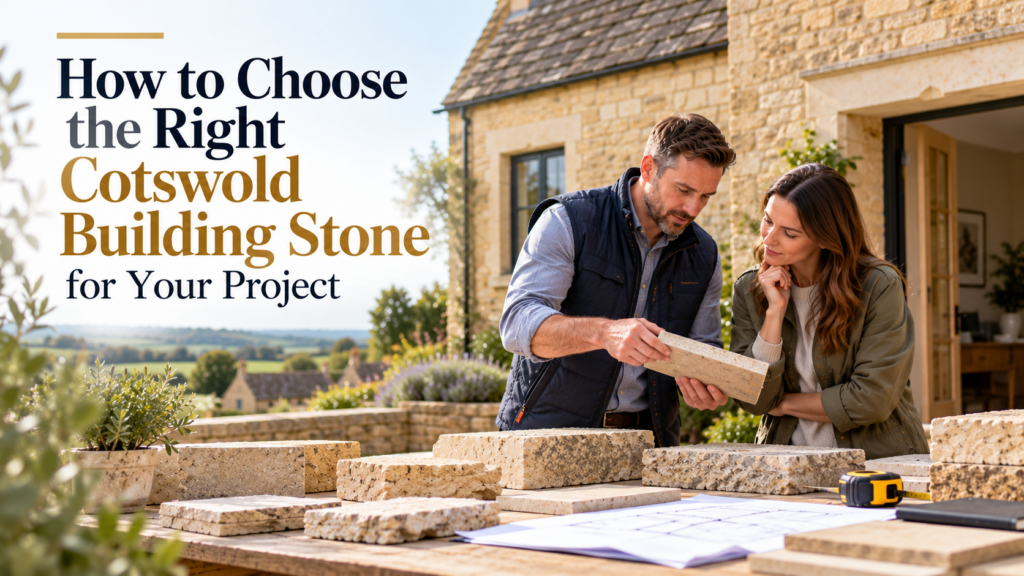
Anyone who has driven through the Cotswolds knows the look. Warm limestone cottages, long dry stone walls running over the hills, village churches that seem to glow when the sun drops low. That look comes from the stone, and if you’re planning a build, an extension or a repair, choosing the right Cotswold building stone will decide how the finished job looks and how well it lasts.
It’s not a decision to rush. Two stones can both be called “Cotswold” and still look quite different once they’re on the wall. Here’s how to work through the choice.
Start With What the Project Actually Needs
Before you look at a single sample, be clear about the job. A new-build house, a garden wall, a barn conversion and a fireplace surround all ask different things of the stone. Some need strength and weather resistance. Others are mostly about appearance.
Write down where the stone will go, whether it’s load-bearing, and how much of it you’ll need. Even a rough figure helps a supplier point you in the right direction. If you’re matching an existing building, take photos in daylight and bring a small piece of the original if you can.
Colour: Honey, Cream and Everything Between
Colour is usually the first thing people notice. Cotswold limestone runs from pale cream to deeper honey tones, and the shade depends on where it was quarried. Stone from the Guiting group of limestones, for example, comes in both honey and cream.
A few things to keep in mind:
- Fresh-cut stone often looks lighter than it will after a year or two outdoors.
- Wet stone looks darker than dry stone, so view samples in different weather.
- A single quarry face can vary slightly from block to block, which is part of the charm. Ask to see a range rather than one tidy sample.
If you’re extending an older property, matching colour matters more than anything else. Sometimes a blend of stones gets you closer than a single type.
Finish and Style: How the Stone Is Dressed
Two walls built from the same limestone can look completely different depending on how the stone is cut and dressed. A rough, split face gives a rustic, traditional feel. A smoother, sawn finish looks crisper and more formal.
Think about the building’s character. A period farmhouse usually suits a more natural finish, while a contemporary home might look better with cleaner lines. Also think about coursing, meaning how the stone is laid in rows. Random coursing looks organic and old. Regular coursing looks tidier and more modern. Your mason can advise on what fits your design.
Match the Stone to the Job
Cotswold stone isn’t only for walls. Depending on your project, you might be looking at:
Walling and building stone. For house fronts and extensions, you’ll want stone that’s consistent, durable and well matched to the surrounding buildings.
Dry stone walling. Field boundaries and garden walls need hand-picked stone of the right shape and weight. Good dry stone walling depends on the quality of the stone you start with.
Flooring. Limestone flooring suits hallways, kitchens and conservatories. It’s hard-wearing, but the finish and thickness should be chosen with foot traffic and underfloor heating in mind.
Fireplaces. A stone fireplace becomes the focal point of a room, so proportions and detail matter as much as the material.
Decorative masonry. Finials, copings, window surrounds and similar details are where craftsmanship shows. These are usually made to order.
Think About the Setting and the Rules
If your property is in a conservation area or the Cotswolds Area of Outstanding Natural Beauty, planning officers often expect local stone that suits the area. It’s worth checking your local authority’s requirements early, before you order anything. A good supplier will have dealt with this before and can tell you what tends to be accepted.
For repair and restoration work, matching the original stone in colour, texture and type is important both for looks and for the health of the building. Modern materials can behave differently from old limestone, and a poor match can cause problems down the line.
Why Cotswold Hill Quarry Is the Best Choice
You could buy Cotswold building stone from many places, but there are good reasons to go straight to the source.
Cotswold Hill Quarry has been working since 1982 from its base at Ford, near Temple Guiting in Gloucestershire. It’s a small, locally owned business, so you deal with people who know the stone rather than a call centre. The quarry produces natural stone from the Guiting limestones in honey and cream shades, and it can also source other stones, including Bath and ironstone, when a project calls for them.
What sets the quarry apart is that it doesn’t stop at selling blocks. Its own stonemasons produce walling, flooring, fireplaces and decorative masonry, and they can work from your drawings. Its restoration work includes Holy Trinity Church in Stratford-upon-Avon, and the team says its stone has been used in conservation work at well-known landmarks such as Blenheim Palace and Hampton Court Palace. It serves both trade professionals and private customers, so whether you’re a builder with a large order or a homeowner with one small wall, you get the same attention.
Add a stated commitment to responsible extraction and to working with local suppliers and trades, and you have a supplier that’s easy to trust.
Conclusion
Choosing the right Cotswold building stone comes down to a handful of sensible decisions. Know what the project needs, pick a colour and finish that suit the building and its setting, match the stone to the job, and check any local requirements early. Look at real samples in real light before you commit.
Just as important is who you buy from. Cotswold Hill Quarry combines over forty years of experience, its own quarried stone and skilled in-house masons, which makes it a dependable partner from first idea to finished wall. To talk through your project, call 01386 584384 or email enquiries@stonequarries.co.uk. The team is available Monday to Friday, 8am to 4pm.
